Menopause Weight Gain in Busan, Korea
Women's Weight Loss at ONE CLINIC Seomyeon
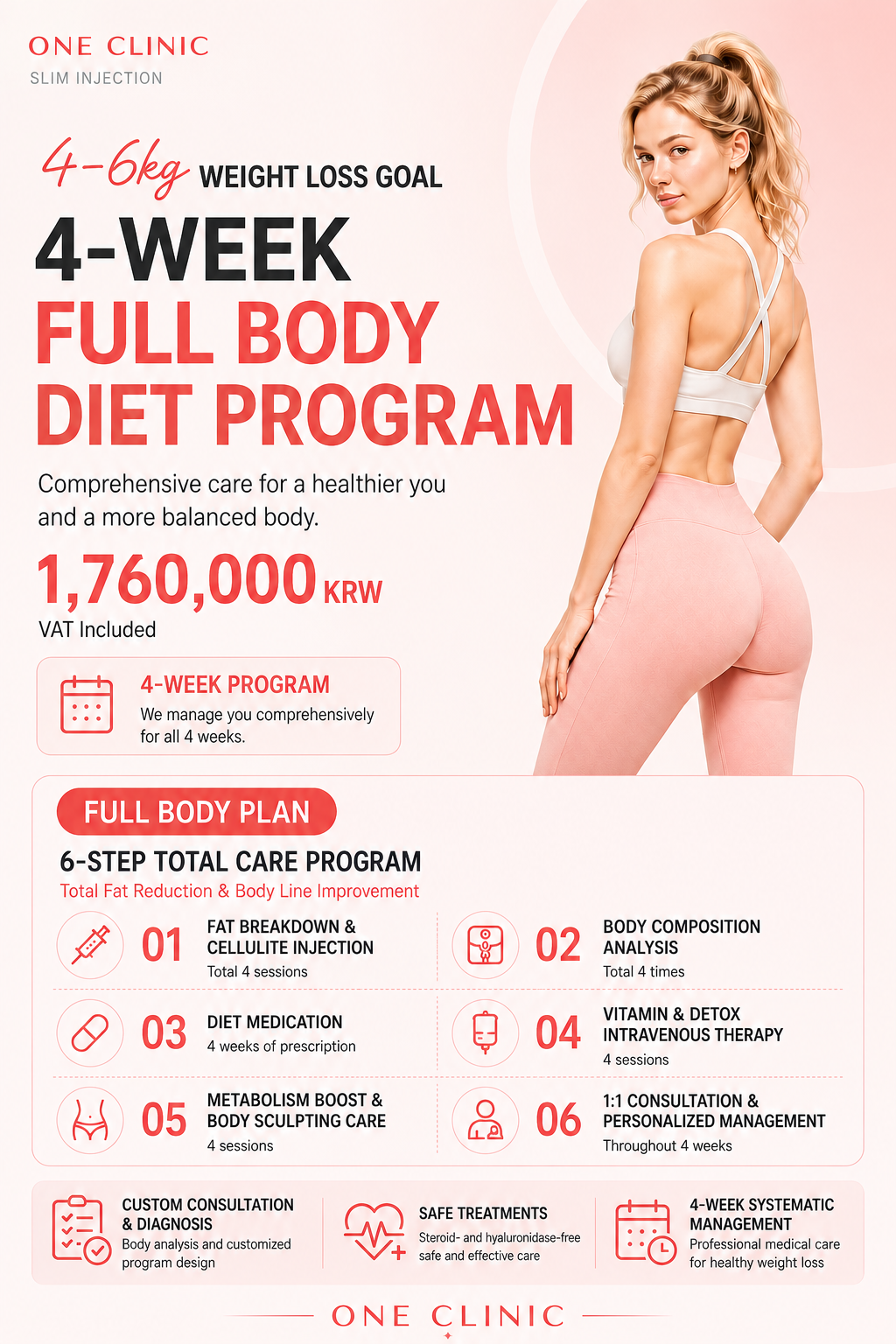
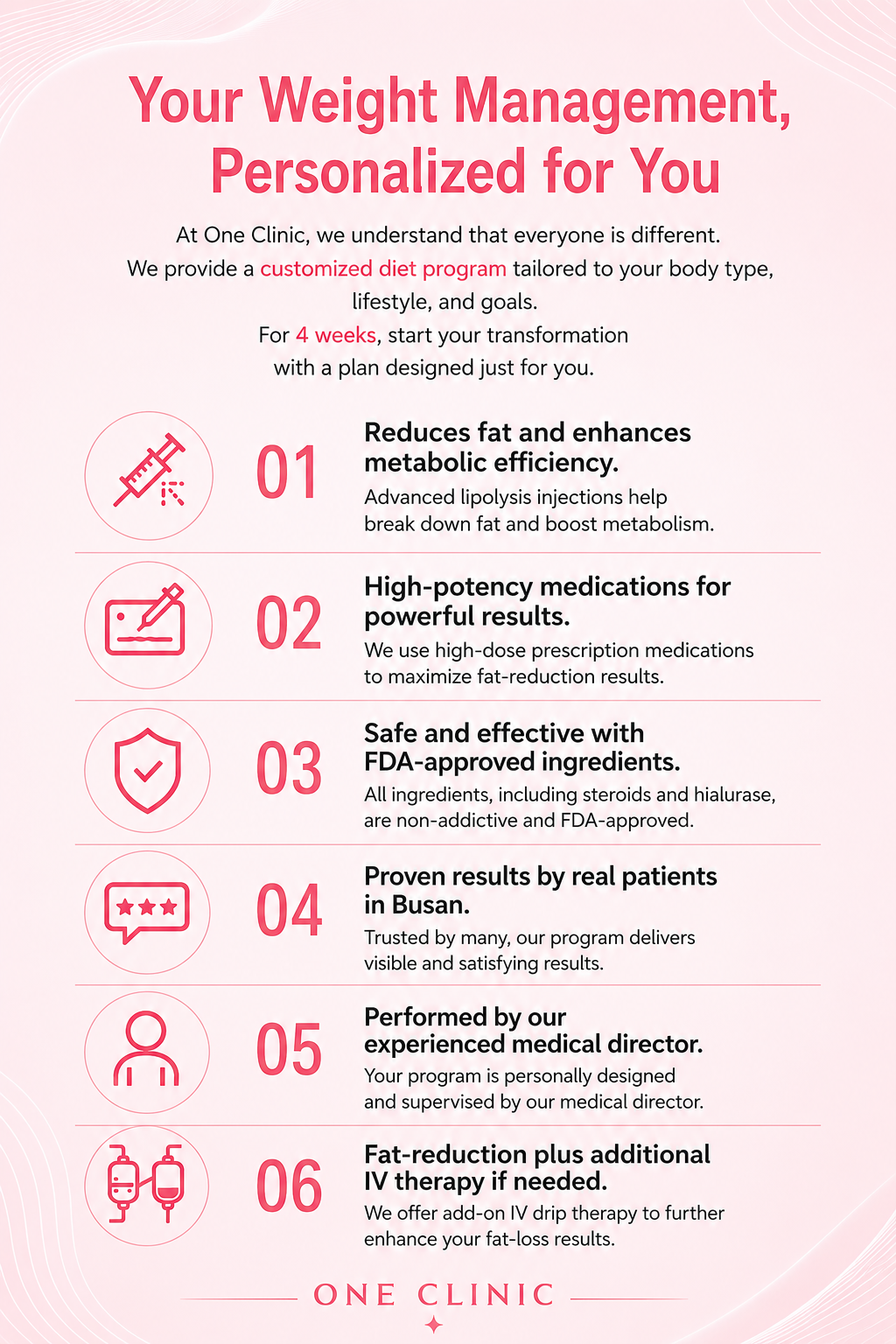
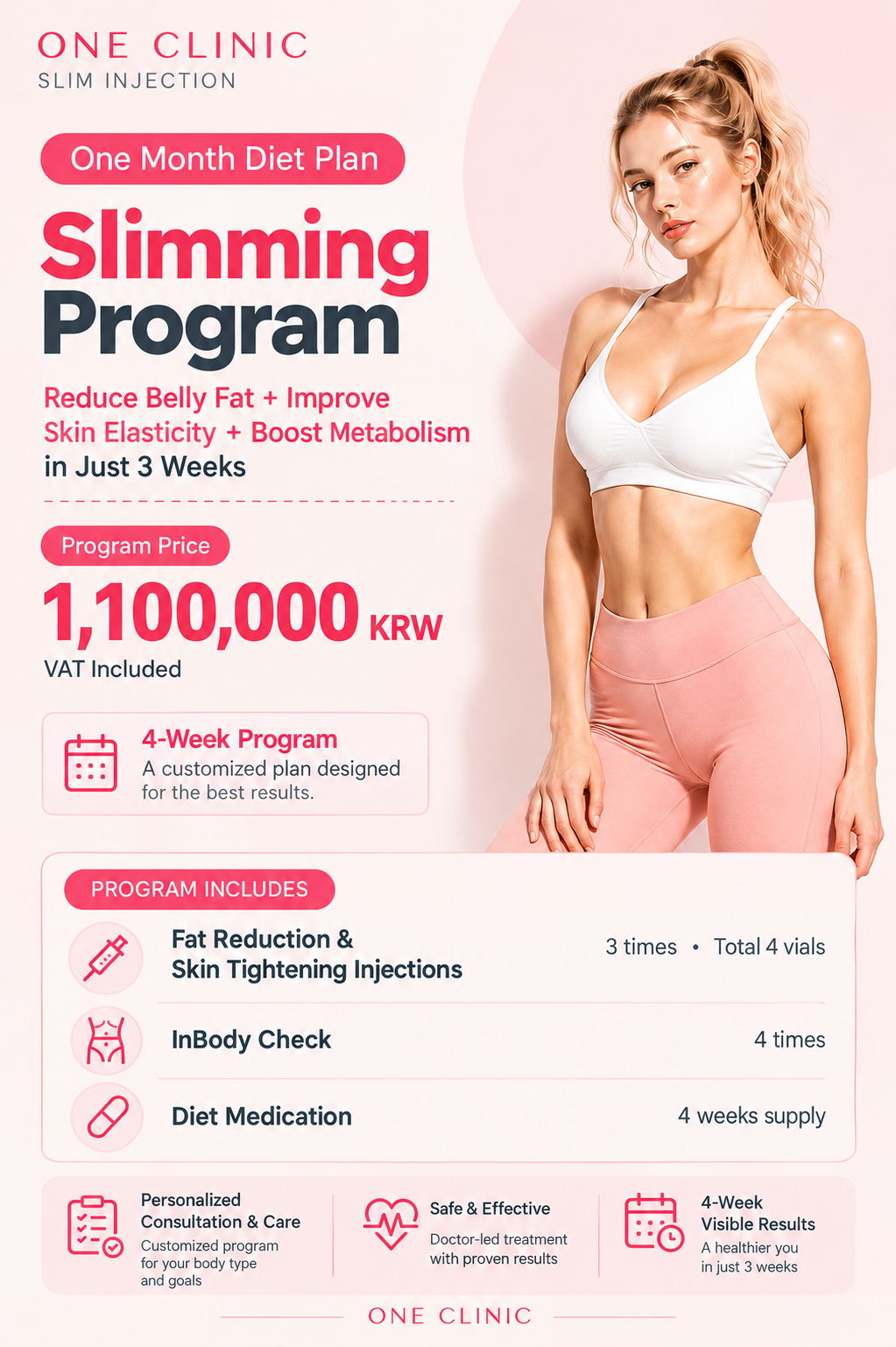
Menopause Weight Gain at ONE CLINIC Seomyeon offers personalized weight-management consultation for local and international patients seeking medically guided support for weight changes, body composition, and healthy weight management during menopause. Menopause weight-management treatment may include personalized nutrition guidance, exercise planning, and appropriate medical weight-management options following medical evaluation. At ONE CLINIC Seomyeon, treatment planning can take into account individual weight goals, health status, lifestyle, hormonal changes, and body-composition concerns. When appropriate, menopause-focused weight management may also be combined with customized body-contouring and aesthetic programs to support a slimmer, more balanced appearance and sustainable weight-management goals.
Menopause Weight Gain in Seomyeon, Busan
Women's Weight Loss at ONE CLINIC Seomyeon
For patients looking for menopause weight gain management in Seomyeon, Busan, ONE CLINIC Seomyeon provides personalized medical weight-management consultation based on individual health status, body composition, lifestyle, metabolic health, and weight-management goals.
Weight gain and changes in body composition are common during midlife. Current menopause guidance notes that overall midlife weight gain is influenced strongly by aging and reduced energy expenditure, while declining estrogen during menopause is particularly associated with increased abdominal fat distribution.
A personalized approach can therefore focus not only on body weight but also on abdominal fat, muscle mass, metabolic health, nutrition, physical activity, and long-term weight maintenance.
What Causes Weight Gain During Menopause?
Menopause-related weight changes can result from several factors rather than a single cause.
Common contributing factors may include:
- Age-related changes in energy expenditure
- Reduced physical activity
- Changes in muscle mass
- Hormonal changes
- Increased abdominal fat accumulation
- Changes in sleep
- Lifestyle and dietary changes
The International Menopause Society notes that menopause-related estrogen decline is an important contributor to increased abdominal adiposity, while overall midlife weight gain is largely associated with chronological aging.
Who May Consider Menopause Weight Management?
Menopause weight-management support may be appropriate for women experiencing unwanted weight or body-composition changes during perimenopause or after menopause.
A consultation may be useful for patients who:
- Have gained weight during the menopause transition
- Notice increased abdominal or waist fat
- Have difficulty losing weight despite lifestyle changes
- Want to preserve muscle mass
- Are concerned about metabolic health
- Want medically supervised weight management
- Are considering prescription weight-loss medication
Treatment should be individualized according to age, menopause status, medical history, medications, body composition, and personal goals.
Personalized Menopause Weight Management at ONE CLINIC Seomyeon
Weight changes during menopause can vary considerably between individuals. At ONE CLINIC Seomyeon, consultation can consider body composition, lifestyle, medical history, current medications, metabolic health, and weight-management goals.
Depending on individual circumstances, a physician may discuss:
- Nutrition counseling
- Exercise planning
- Body composition analysis
- Metabolic health evaluation
- Prescription weight-management medication
- Long-term weight-maintenance strategies
The goal is to develop a practical treatment plan rather than focusing solely on the number on the scale.
Menopause and Body Composition
Menopause can be associated with changes in body composition and fat distribution. In particular, abdominal fat can become more prominent, while maintaining muscle mass becomes increasingly important.
Body composition assessment may provide information about:
- Body fat percentage
- Body fat mass
- Skeletal muscle mass
- Lean body mass
- Visceral-fat-related indicators
- Changes in body composition over time
Abdominal obesity can be associated with increased cardiometabolic risk, even among women whose BMI is within the normal range.
Nutrition and Menopause Weight Management
Nutrition is an important part of managing weight during and after menopause.
A sustainable nutrition approach may focus on:
- Appropriate calorie intake
- Adequate protein
- Nutrient-dense foods
- Balanced meals
- Portion management
- Adequate hydration
- Sustainable eating habits
Extreme calorie restriction may make it more difficult to maintain muscle mass and sustain a healthy eating pattern over time. Individual nutritional needs should be considered when developing a weight-management plan.
Exercise and Menopause Weight Gain
Regular physical activity can support weight management, muscle maintenance, and metabolic health during midlife.
An individualized exercise plan may combine:
- Aerobic activity
- Resistance training
- Walking and daily movement
- Strength exercises
- Flexibility and mobility work
- Appropriate rest and recovery
Current menopause recommendations identify regular physical activity and behavioral modification as important interventions for preventing and managing midlife weight gain.
Metabolic Health and Menopause Weight Gain
Menopause-related changes in body composition can occur alongside changes in metabolic health.
Depending on individual circumstances, a medical evaluation may consider:
- Blood pressure
- Blood glucose
- HbA1c
- Cholesterol and lipid profile
- Body composition
- Waist measurements
- Liver and kidney function when clinically indicated
This can help provide a broader picture of health beyond weight alone.
Prescription Weight Loss Medication and Menopause
For midlife women who meet the appropriate BMI and medical criteria, anti-obesity medications may be considered as an adjunct to lifestyle interventions. Current menopause guidance notes that these medications can be useful for eligible patients but may require longer-term treatment.
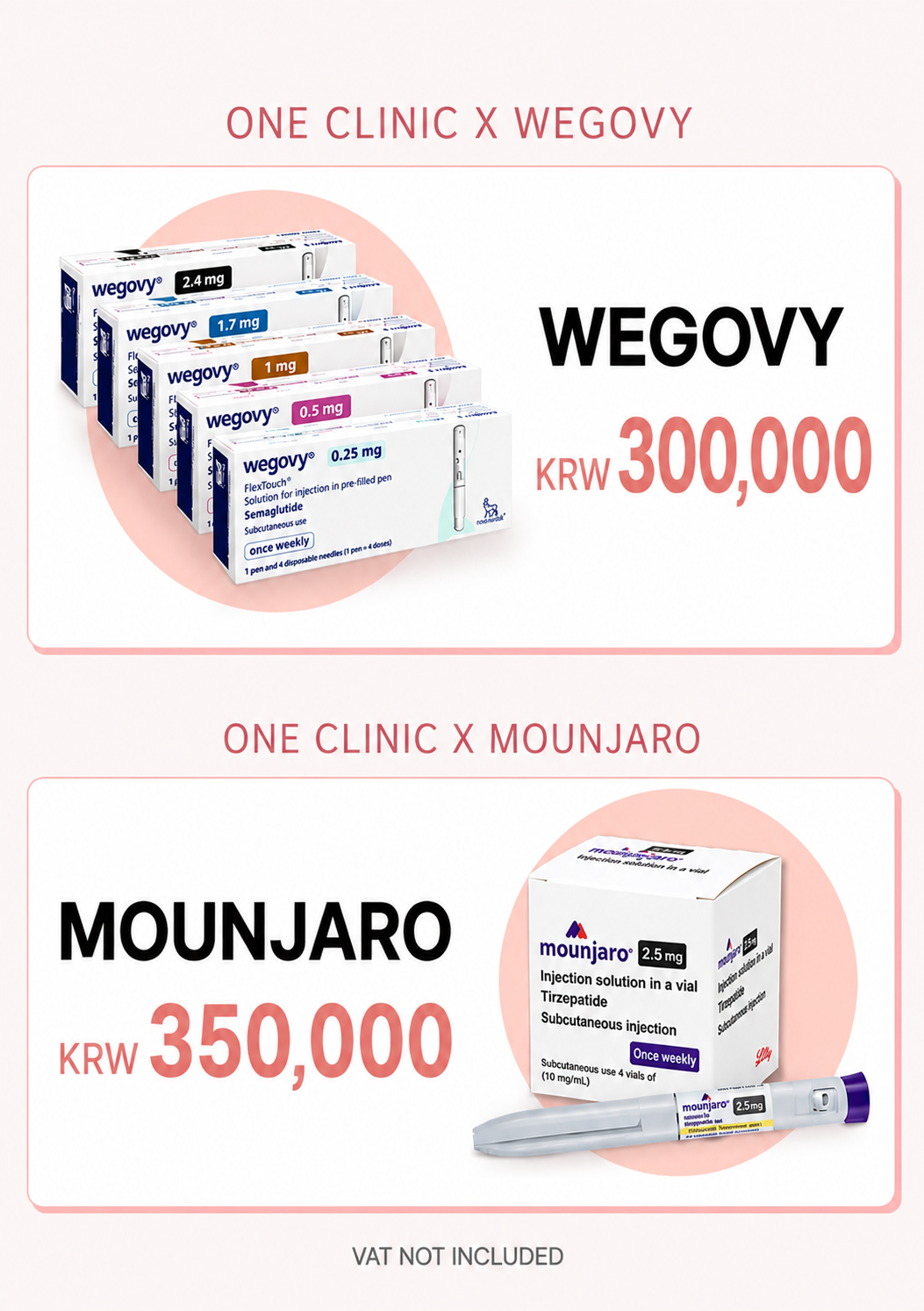
Depending on individual circumstances, a physician may discuss prescription options such as:
- GLP-1 receptor agonists
- GIP/GLP-1 receptor agonists
- Other approved weight-management medications
Medication selection should take into account medical history, current medications, potential contraindications, side effects, and individual treatment goals.
Menopausal hormone therapy (MHT) should not be used specifically as a weight-loss treatment. While it may have effects on body-fat distribution and metabolic factors, its primary role is the management of appropriate menopause symptoms and health considerations.
Menopause Weight Gain and Body Contouring in Busan
Medical weight management and body contouring address different concerns.
Weight-management treatment focuses on overall body weight, body composition, and metabolic health, while body-contouring treatments generally focus on localized fat and body shape.
Patients may remain concerned about areas such as:
- Abdomen and waist
- Thighs
- Upper arms
- Back
- Double chin
- Localized fat
- Reduced skin firmness
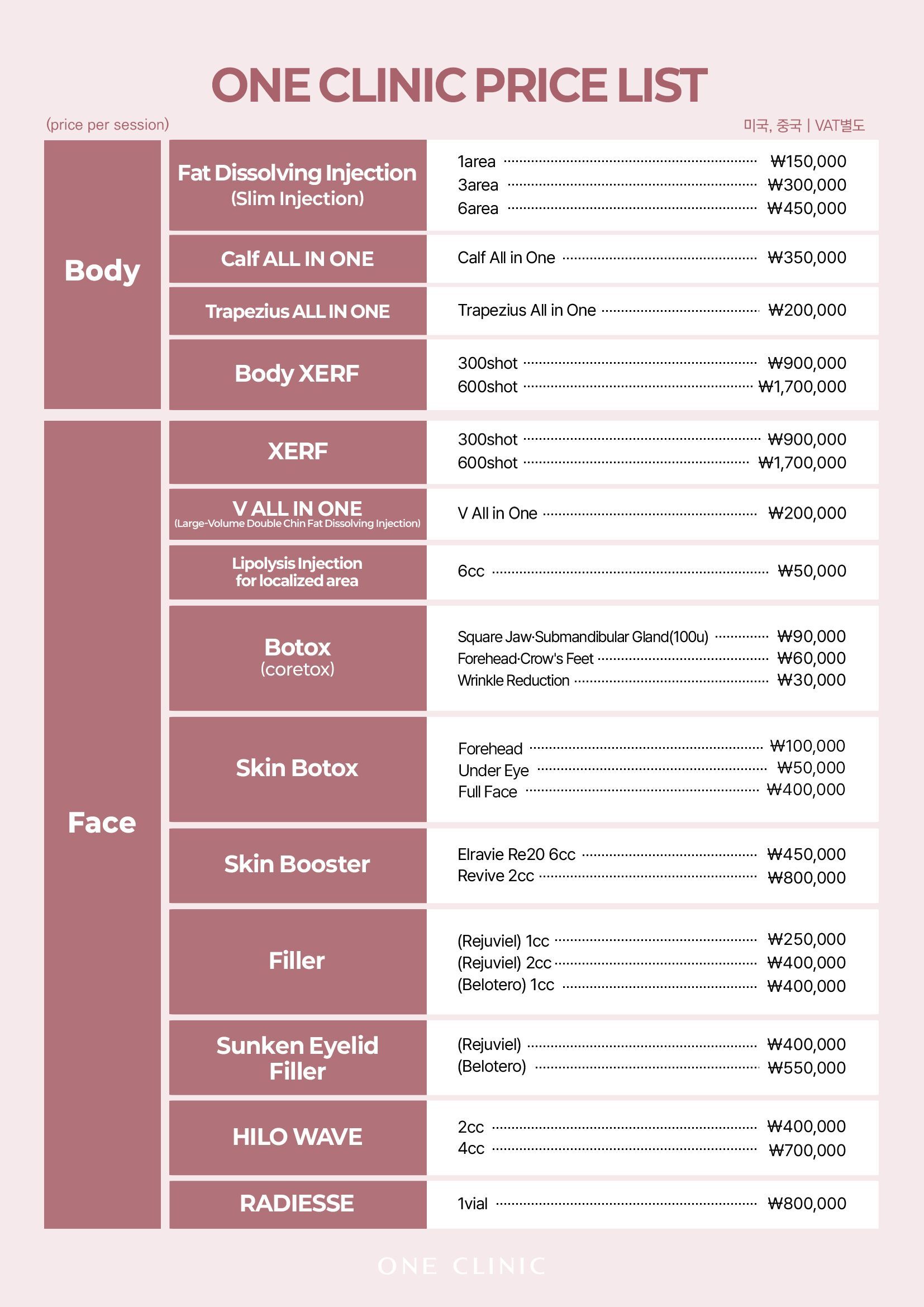
ONE CLINIC's aesthetic services can provide separate consultation for localized fat and body-line refinement when appropriate.
Why Choose Seomyeon, Busan?
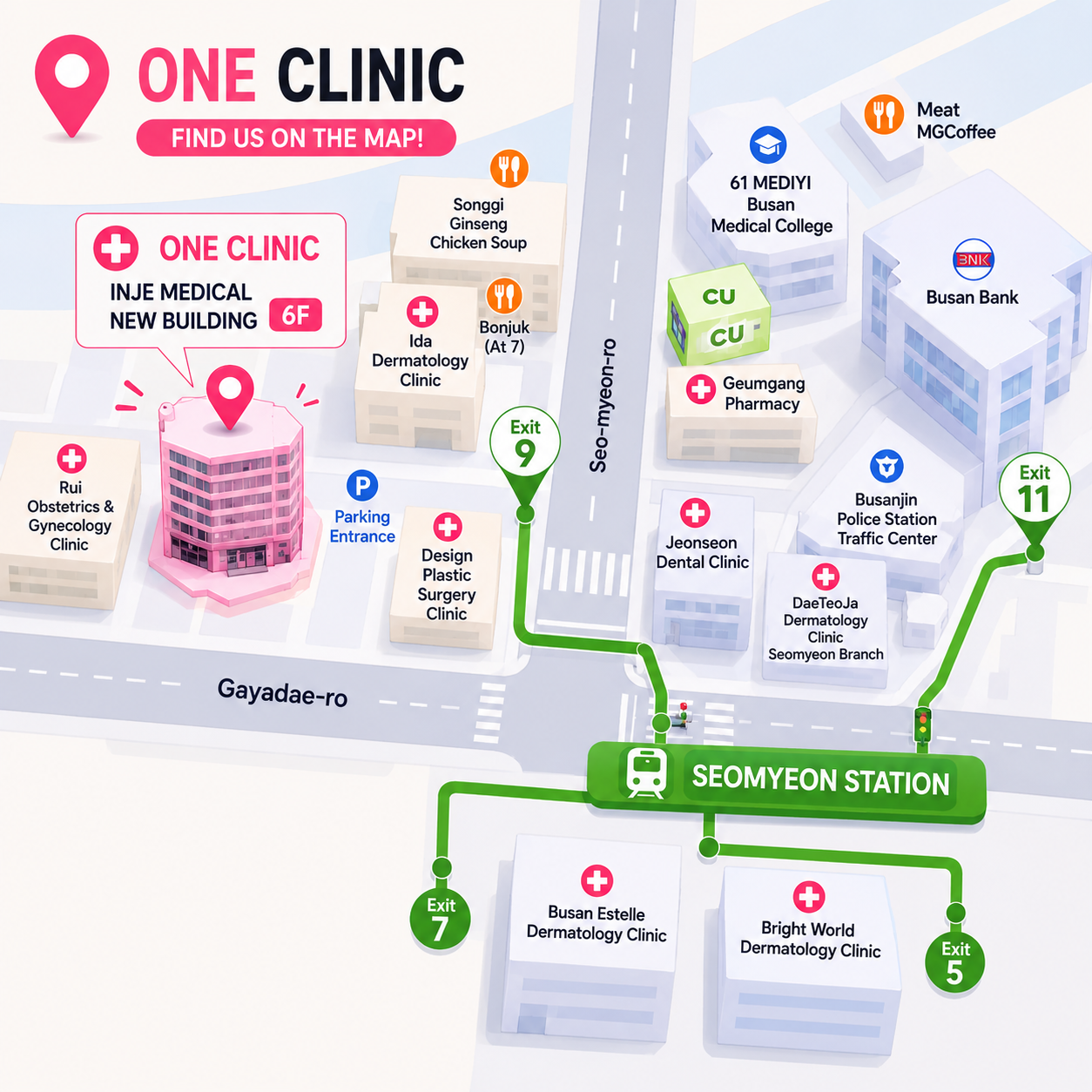
Seomyeon is a central and convenient area of Busan for patients seeking medical and aesthetic care. Its accessibility can also make it practical for international visitors staying in Busan.
ONE CLINIC Seomyeon provides personalized consultation so that weight-management planning can consider individual health goals, lifestyle, treatment schedules, and travel circumstances.
Menopause Weight Management for International Patients in Busan
International patients considering menopause weight-management care in Busan can discuss their weight changes, lifestyle, body composition, and overall health goals with a medical professional.
Before starting treatment, patients may want to understand:
- Whether metabolic evaluation is recommended
- Whether body composition analysis is appropriate
- Whether prescription medication may be suitable
- Recommended nutrition and exercise strategies
- Potential side effects of medication
- Follow-up requirements
- How weight management can continue after returning home
Patients already taking medications for menopause, diabetes, blood pressure, or other conditions should provide their current medication information during consultation.
Medical Weight Management for Menopause at ONE CLINIC Seomyeon
For patients searching for menopause weight gain management in Seomyeon, Busan, ONE CLINIC Seomyeon offers an individualized approach that can consider body composition, metabolic health, lifestyle, menopause-related changes, and personal weight-management goals.
For appropriate patients, nutrition, exercise, body-composition monitoring, and prescription weight-management medication may be incorporated into a broader plan. The focus is not simply on losing weight but on supporting healthier body composition and sustainable long-term weight management.
FAQ
Why do I gain weight during menopause?
Midlife weight gain is influenced by several factors, including aging, reduced energy expenditure, changes in physical activity, and changes in body composition. Declining estrogen during menopause is particularly associated with increased abdominal fat distribution.
Why does menopause cause more belly fat?
Hormonal changes during menopause, particularly declining estrogen, are associated with a shift toward greater abdominal fat accumulation. Aging and lifestyle factors can also contribute to changes in body composition.
Can exercise help with menopause weight gain?
Yes. Regular physical activity can support weight management and metabolic health, while resistance exercise can also help support muscle strength and mass. A combination of aerobic and resistance activity can be incorporated according to individual ability and health status.
Can I use weight-loss injections during menopause?
Some anti-obesity medications may be appropriate for eligible midlife women who meet the relevant criteria. A physician should evaluate medical history, BMI, medications, contraindications, and individual goals before prescribing treatment.
Does hormone replacement therapy help with weight loss?
Menopausal hormone therapy is not recommended as a weight-management treatment. It may be appropriate for managing certain menopause symptoms and health considerations, but it should not be prescribed specifically to lose weight.
Can international patients receive menopause weight-management consultation at ONE CLINIC Seomyeon?
International patients can seek consultation at ONE CLINIC Seomyeon. However, the appropriate evaluation, medication eligibility, treatment plan, and follow-up requirements should be determined according to each patient's individual health status and goals.